RAM Kits Are Now Shipping with Fake Sticks Inside — And Your Server Might Be Next
I thought I had seen every hardware grift in the book. Relabeled Xeon processors with fake IPC claims. "Enterprise grade" SSDs that turned out to be QLC NAND with a sticker on top. Counterfeit network cables that passed visual inspection but failed at anything above 1 Gbps. But this week, the PC hardware industry hit a new low that I genuinely did not see coming: RAM manufacturers are now selling kits with one real memory stick and one fake stick bundled together in the same package.
Yes. You read that correctly. You buy a "2-stick kit" and one of them is a dummy. A cosmetic piece of plastic designed to fill the empty DIMM slot on your motherboard so your build looks complete. They are calling it a "1+1 value pack" and marketing it as "psychological relief." I wish I were making this up.
The Memory Shortage That Made Fake RAM Sticks Possible
To understand how we got here, you need to understand what has been happening in the DRAM market. The global memory shortage that started accelerating in late 2025 has pushed DDR5 prices to levels that would make a crypto miner blush. A 32 GB DDR5-6000 kit from a reputable brand currently runs between $180 and $240 — roughly double what it cost eighteen months ago. 64 GB kits are approaching $400, and anything with tight timings or Samsung B-die chips is essentially priced like jewelry.
The shortage is driven by a perfect storm: AI data center demand eating up production capacity, TSMC and Samsung shifting fab allocation toward HBM (High Bandwidth Memory) for GPU manufacturers, and consumer demand that refuses to drop because AMD's AM5 platform requires DDR5 exclusively. There is no DDR4 fallback option for anyone building a new Ryzen system in 2026.
My friend Greg, who runs a small hosting company out of Austin with about 40 bare-metal servers, told me over the phone last week that his DDR5 ECC costs have gone up 67 percent since January. "I had a quote for 128 GB kits in December at $310 each," he said. "The same vendor quoted me $520 this month. Same part number. Same supplier. I asked if it was a typo and the sales rep just laughed."
What These Fake RAM Kits Actually Contain
Tom's Hardware broke the story this week, and the details are even worse than the headline suggests. Multiple vendors — primarily operating through Amazon, AliExpress, and Newegg marketplace — are selling DDR5 kits labeled as "2x16 GB" or "2x32 GB" that actually contain one functional DIMM and one non-functional dummy module.
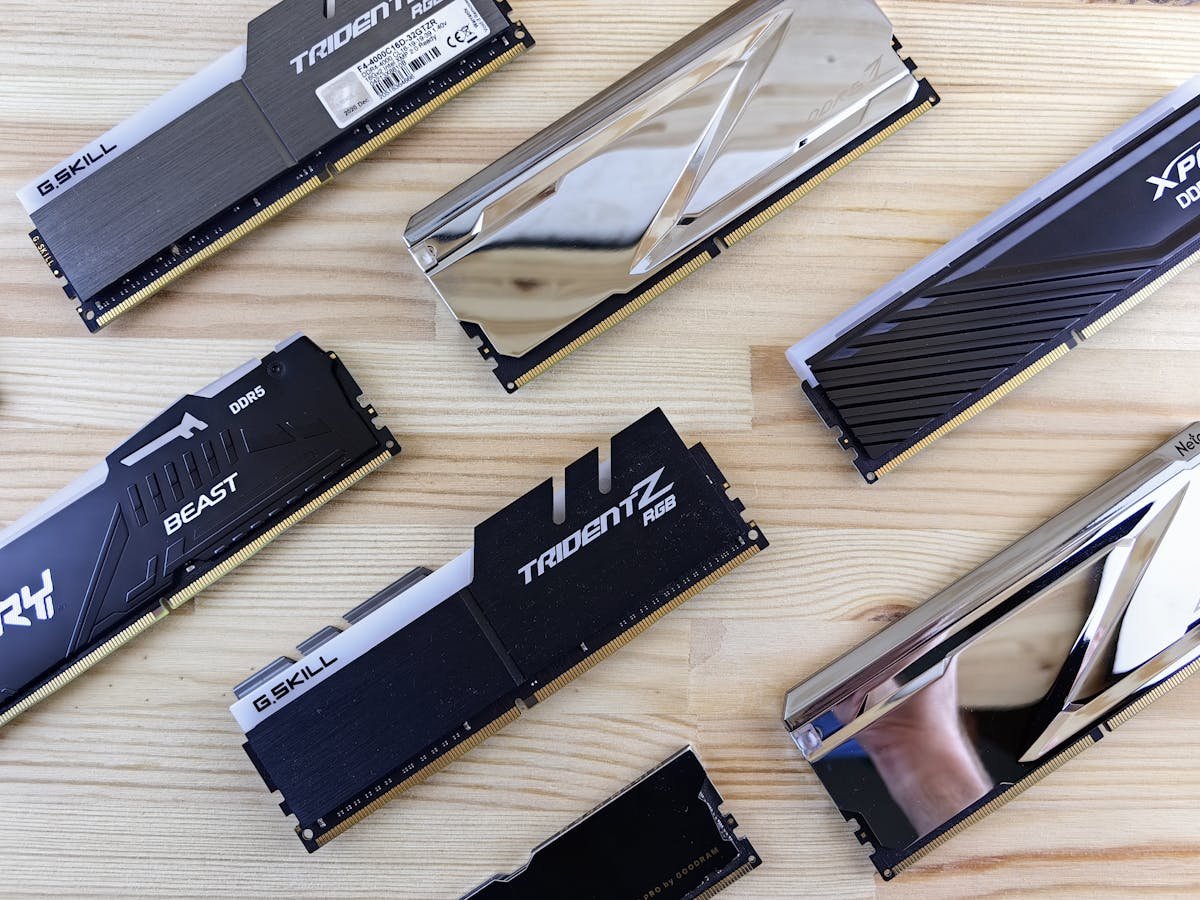
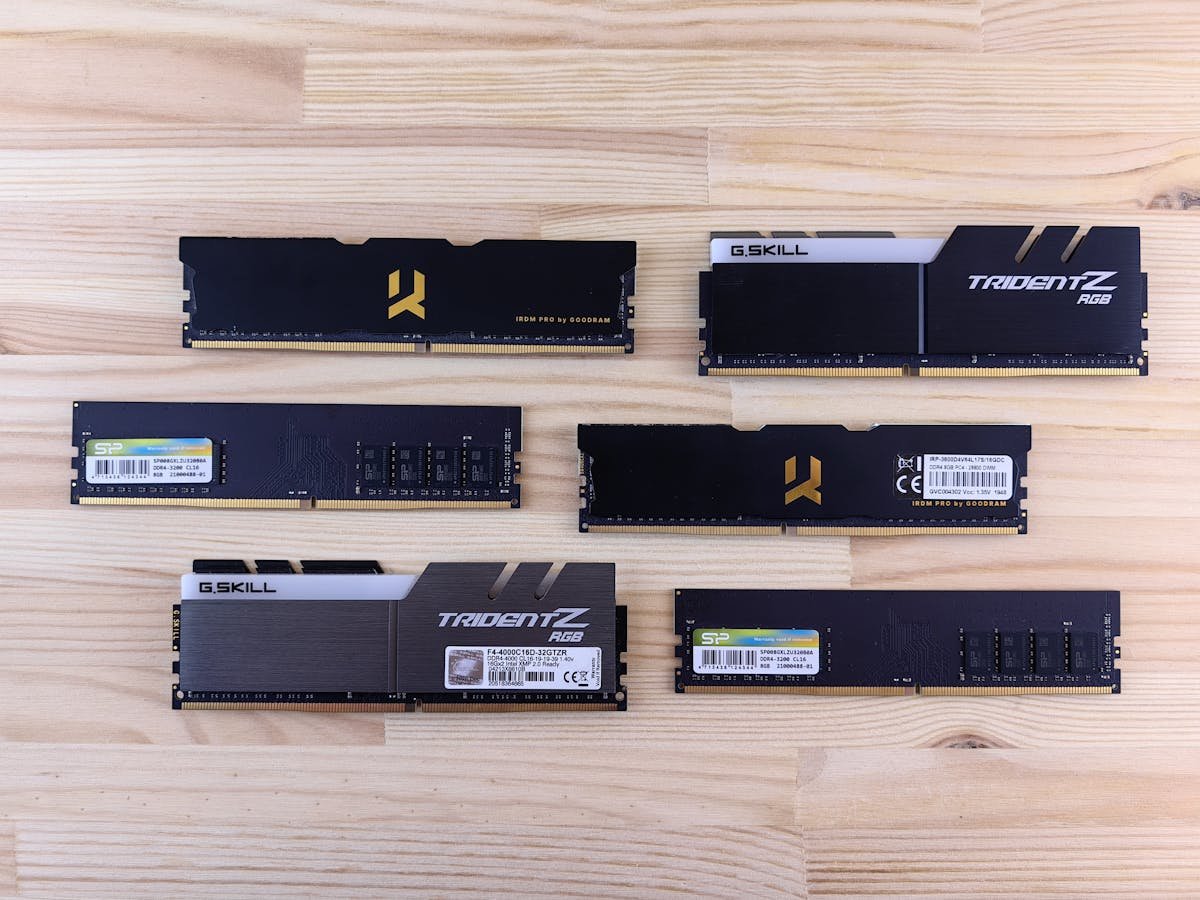
The dummy sticks are physically identical to the real ones. Same PCB color. Same heat spreader design. Same branding stickers. They slot into a DIMM socket, the retention clips close properly, and to the naked eye, your motherboard looks fully populated. But the fake stick contains no DRAM chips — or in some cases, contains non-functional chips that are present purely for weight and visual authenticity.
The motherboard BIOS simply does not detect the dummy stick. Your system boots with half the advertised RAM, running in single-channel mode instead of dual-channel. For AMD Ryzen systems, this is particularly devastating because the Infinity Fabric clock is linked to memory frequency, and single-channel operation cuts memory bandwidth roughly in half — tanking gaming performance by 15 to 30 percent and productivity workloads by 10 to 20 percent depending on how memory-bound they are.
The "Psychological Relief" Marketing Angle
Here is the part that made me physically recoil from my monitor. Some of these listings explicitly market the dummy stick as providing "psychological relief" and "visual completeness." The product descriptions acknowledge — in actual text on the listing page — that one stick is non-functional. They are not trying to hide it in the fine print. They are selling the aesthetic of having all your DIMM slots filled as a feature.
And people are buying them. Not because they want a fake stick, but because the listings are algorithmically optimized to appear in search results for "DDR5 32GB kit" and the disclosure about the dummy module is buried in the fourth bullet point or hidden in the product description below the fold. Tom, who builds PCs for his company's QA lab, almost ordered one before catching the fine print. "The listing looked identical to a legitimate Kingston kit," he told me. "Same price range, same specs in the title. You had to read the description to catch it."
Why This Matters for Cloud and Hosting Infrastructure
If you are thinking "this is a consumer problem, it does not affect enterprise," I would encourage you to reconsider. The same supply chain pressure that created the consumer fake RAM market is hitting enterprise procurement channels. And the counterfeit problem in server hardware has been growing for years.
A 2025 report from IHS Markit estimated that counterfeit electronic components cost the global industry $75 billion annually. Server RAM is one of the most commonly counterfeited components because the margins are enormous — a fake 64 GB DDR5 ECC RDIMM that costs $15 to manufacture can sell for $200+ to an unsuspecting buyer.
How to Verify Your Server RAM Is Genuine
Whether you are running a homelab, managing colocation hardware, or procuring for a data center, here is what you should be checking:
Run memtest86+ on every new stick before production deployment. This is non-negotiable. A full pass takes 4 to 8 hours depending on capacity, but it will immediately reveal dummy sticks (no memory detected), under-spec chips (errors under load), and remarked modules (lower actual capacity than labeled). I run two full passes minimum — the first catches obvious fakes, the second catches thermal-related errors that only appear after the module heats up.
Verify SPD (Serial Presence Detect) data. Every legitimate DIMM has an SPD EEPROM that stores the manufacturer, part number, rated speed, and timing specifications. On Linux, use decode-dimms (part of i2c-tools) to dump this data. On Windows, CPU-Z reads it natively. Fake modules either have blank SPD data, mismatched manufacturer IDs, or timings that do not correspond to any real JEDEC specification.
Cross-reference part numbers against manufacturer databases. Samsung, SK Hynix, and Micron all publish their module part number formats. A module claiming to be Samsung with a part number that does not match Samsung's naming convention is counterfeit. Period. Greg caught a batch of "Samsung" ECC DIMMs this way — the part number format was off by one character, which a quick lookup on Samsung's semiconductor website revealed immediately.
Buy from authorized distributors only. This sounds obvious, but the temptation to save 20 to 30 percent by buying from marketplace sellers is real, especially when you are ordering 40 sticks at a time. Authorized distributors like Arrow, Mouser Electronics (different Mouser — no relation to the mouse software), Digi-Key, and CDW maintain chain-of-custody documentation that marketplace sellers cannot provide.
Weigh the modules. This is a surprisingly effective low-tech check. A legitimate 32 GB DDR5 DIMM with 16 DRAM chips and a heat spreader weighs between 45 and 55 grams depending on the design. A dummy stick with no functional chips weighs noticeably less — typically 20 to 30 grams. A kitchen scale accurate to 1 gram is a $12 investment that can save you hundreds.
The Bigger Supply Chain Trust Problem
The fake RAM situation is a symptom of a deeper issue that the infrastructure community has been warning about for years: hardware supply chain integrity is eroding. When DRAM prices spike, counterfeit operations scale up. When GPU supply is constrained, fake GPUs appear on marketplaces. When NVMe SSDs are expensive, relabeled drives with slower NAND flood the secondary market.
The difference in 2026 is that the counterfeits are getting better. The fake RAM sticks in these "1+1 value packs" are physically indistinguishable from the real thing to the naked eye. The heat spreaders are the same alloy. The PCB silkscreening is accurate. Even the packaging mimics legitimate retail boxes. You need instrumentation — SPD readers, memtest, precision scales — to tell them apart.
For anyone running production infrastructure, the lesson is simple: trust but verify. Every single component. Every single time. The 4 hours you spend running memtest86+ on a new RAM shipment is nothing compared to the 14 hours you will spend troubleshooting mysterious memory errors at 3 AM on a Saturday when your monitoring alerts finally fire because the single-channel fake module could not handle the production load spike.
Ask me how I know. Actually, don't. I am still processing the trauma. And the $520 invoice Greg forwarded me is still open on my screen, silently judging everyone who thought hardware procurement was the boring part of infrastructure management.
It is not boring anymore. It is a minefield with excellent packaging.
And if someone tries to sell you a "value pack" where half the value is imaginary, remember: the only thing that belongs in your empty DIMM slots is more actual RAM. Not a plastic placebo with a heat spreader designed to make your motherboard look pretty on Instagram. Your server does not care about aesthetics. It cares about bandwidth. Give it the real thing or leave the slot empty. Your uptime depends on it.
Related Reading
If you found this useful, check out these related articles:
— Written from 11+ years of hands-on server operations at Warung Digital Teknologi (wardigi.com), including migrations, cost optimization, and performance tuning.
Found this helpful?
Subscribe to our newsletter for more in-depth reviews and comparisons delivered to your inbox.